Posts Tagged ‘west virginia’

10 Things About The Boy Scouts You Didn’t Know

Tuesday, February 16th, 2010

Southern West Virginia recently got some great news for anyone planning a visit with kids:  The Boy Scouts of America are going to be building their newest High Adventure Base Camp right here in the mountains.

We’re all really excited to have the scouts come and explore the New River Gorge, and make it their new home.

How much do you know about the Boy Scouts?

Boy Scouts of America Logo

-The Scouts were incorporated February 1910 in the District of Columbia (Hey, that’s exactly 100 years ago!)  The first annual meeting was held at the White House.

-Scouts go to space.  179 astronauts were in the scouts, and 39 of those were Eagle Scouts.

-With the new facility here in West Virginia, there will be a total of 4 High Adventure Bases in the United States.  Last year, more than 1 million scouts visited the first 3 Bases.

-The scouts have a (kind of) secret handshake.  In 1923, the left handclasp was adopted as a good way to say Hi.

-The Boy Scouts  were recruited in both world war I and II to by the U.S. Government to help with the war effort.  They helped with selling war bonds, and driving fuel and food conservation projects.

-The scouts are on their own stamp.  The first one was issued in 1950 and was worth 20 cents.  Today, it’s worth double that (though there’s probably a lot more sentimental value).

-The first female scouts joined the Explorers program in 1969.

-The 100 millionth youth member joined the scouts in 2000.  It was a kid named Mario Castro, a 12 year old Mexican immigrant from Brooklyn.

-The National Scout Jamboree is a gathering of tens of thousands of scouts from all over the country every three to five years.  It used to be held at Fort A.P. Hill in Virginia (last one at this location being held July 2010).  From now on, they’ll be… you guessed it… here in southern West Virginia.

-There are almost 3 million scouts and more than 1 million scout volunteers active today.

The 5 Coolest Trees In Southern West Virginia

Wednesday, February 3rd, 2010

When people come to visit West Virginia, a lot of them come for one reason:  Trees.

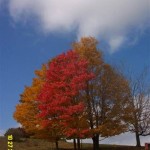
Red Maple

Red Maple

Actually, that’s made up.

People think of all kinds of reasons to come, and trees are not on the list.  White water rafting- check.  Family reunions?  Yes, absolutely.  Trees:  probably not.

Not specifically, anyway.  Its more like the idea of trees that brings people to visit.   Trees as a metaphor.  They are simply the symbol of a simpler life; there can’t be too much wrong with a place that’s surrounded by acres and acres of trees.

Plus, trees do a lot of the convincing when it comes to the whole “get outside and see nature” thing.  Sure, there’s the Utah desert, but they only have 2 different kinds of trees, more or less (that pine one, and that other one that looks like pine).  We have more than 100.

Here are the 5 best ones…

Norway Spruce: The Norway spruce is just about the most elegant tree in the forest.  One of the tallest, too.   The Norway has long branches that curve gently upward as the branch extends away from the trunk.  These could be the some of the worlds’ most perfect climbing trees.

Tulip Poplar: That’s right:  I love the tulip poplar, and I don’t care who knows.  So what if you have to clean up an average of one million leaves every fall?  They’re big trees and they have an  amazing secret:  They’re not poplars!  They’re actually a member of the magnolia tribe.  And guess what?  They’re not Tulips, either.

Sycamore: The Sycamore is the best way to tell if you’re getting close to a wild mountain river.  It’s got that distinctive green, papery bark, and a large beautiful maple-like leaf that it leaves all over the river gorges of the state.

Sugar Maple: Maples are good for shade, wood, climbing, swinging, sleeping under, and just about everything else.  The Sugar Maple also happens to be our state tree, so you get a tax credit if you plant one in your yard.  That last point isn’t true, actually, but it should be.  And the leaves  turn bright yellow in the fall.

Royal Paulownia Tree: It’s big.  It’s invasive.  It’s got purple flower pods.  It’s the Royal Paulownia tree, also known as the Princess tree.  Everything about the tree is gigantic, from its leaves to its growth rate.  It can grow thirty feet in three years!  Concentrations are thicker where there was trade; the Paulownia was an ornamental before it went wild.  The flowers, along with redbud, time perfectly with the arrival of spring.

This isn’t a definitive list.  People have their own favorites.  But these might be the five most widely seen and recognized.  And, hey, Arbor Day is coming.  Better know your trees.

What’s The Deal With Monroe County?

Friday, October 2nd, 2009

Hey… Take It Easy
Here’s the thing about visiting West Virginia:  It can get pretty

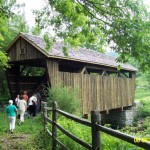
Indian Creek Covered Bridge

Indian Creek Covered Bridge

busy.  Especially in Monroe County.  It’s the ideal place to take it easy.

Seriously.  I’ve had to wait minutes, literally minutes, for big groups of wild turkeys to cross the road.  Same thing with deer.  With me just sitting there, watching.

And if I’m taking a walk around the mountains in the southern part of the Mountain State, I’ve had to wait almost an hour to see the sun set.  Honestly.  Sometimes longer.

A Different Kind Of Busy
Monroe County doesn’t have a stoplight.  Or a highway.  And that suits the people there just fine.

It suits a lot of visitors just fine, too.  Monroe County might be one of the greatest escapes no one knows about.  Those lucky ones who know and visit there get to experience a real retreat.

Nothing To Do, And All The Time In The World To Do It
If you’re thinking of heading out to Monroe County, you’ll want to take your time.  That’s why you’re going there in the first place, right?

Well, you should look around, because there are a lot of great places to do nothing when you get there.  For starters, there’s some perfect lakes and streams that are made of the kind of country R n’ R that fits Monroe County so well.

Try the banks of Indian Creek that drains into the New River (and passes under the Indian Creek Covered Bridge), or Potts Creek which runs the other way, into the James River.  There’s fishing and floating to be done on both, and they’re about as busy as the rest of the area, meaning there’s plenty of peace and quiet.

For the best water in the county, though, you should try Moncove Lake State Park. Everything in the park is within walking distance, and the park backs up to a much larger wildlife management area.  So, there’s swimming in the summer, hunting in the fall, and all kinds of stuff in between.

So What Else?
Well, a stop in Union can give you a glimpse of what small town life in Monroe County is all about.  Make sure to check out the courthouse, which is on the national registry of historic buildings.

The county also boasts  restored covered bridges, old grain and blacksmith mills, and historic churches and cemeteries.

Another “don’t miss” is the Wolf Creek Winery.  Tours and tastings are held all the time, and there’s plenty of opportunity to drink in the great flavor of the area.  With every sip, you can taste the clean Greenbrier Valley water, cool nights, and warm summer sun.

And if you don’t taste it the first time, just keep on sippin’.  You’ll get there.  Promise.

So take a trip to find out what the big deal is about Monroe County.  When you get there, grab a bottle of wine and head off in any direction.  You’re sure to find mountains, streams, lakes, and some secluded, laid-back spots that jump up and invite you to relax and enjoy it all.

And forget about traffic.  Except the deer.

What’s The Big Deal With Southern West Virginia?

Wednesday, July 15th, 2009
Golden Delicious Apples

Golden Delicious Apples

Here’s a secret:  southern West Virginia is one of the best vacation spots in the country.

Maybe that’s our fault.  We don’t want to keep it a secret, obviously.  Please, be our guests; tell everyone.  Shout it from the hilltops.  Share it on your facey-spacies.  It’s a big deal.

A New Blog Series
Well, a lot of us think it’s a big deal.  So, we’re going to spotlight exactly why with a short series of blog posts.

We’ll be talking about some of the major draws for visitors throughout our region.  And the way we’ll do that is by going from area to area, and listing the things that we like about it.

That way, when people say, “Hey, what’s the big deal about Beckley, WV?”, you can say, “Oh, Beckley? That place has a coal mine tour that goes 1500 feet under a mountain.  You’ve never been?! Are you out of your mind?  We need to go right now!  That place is a big deal…”

Or something like that.

Some Examples Of Why SWV Is A Big Deal (We’re Biased)

There really are great reasons to come visit.  Of course, we’re a little one-sided.  But can you blame us?  Check this out…

•    West Virginia is covered by more than 75% forest.
•    We have the lowest crime rate in the country.
•    One reason we’re the Mountain State is because we have the highest          average elevation east of the Mississippi.
•    We were once the site of the largest Oak tree in the country (it died), and still have the largest Sycamore (goin’ strong).
•    We’re the most northern of southern states and the most southern of northern states.
•    We have the world’s first brick street.
•   Golden Delicious apple? That’s right.  West Virginia.

Typical Big Deal Information

What we really want to provide with these posts are facts about cool stuff to see and do, places that we like to stay, some of the best places to eat… that kind of thing.

Vacation time is precious.  Maybe we can help plan a little of yours by finding out what the big deal is around southern West Virginia.

And thanks, too, for reading them. We hope they’re helpful.

What’s Your Big Deal?
Have a place that you’d like spotlighted?  Some info on the big deal about so-and-so town?  Share it.  Reply to any of these posts, and let the world know what you know that you want others to know about southern West Virginia.